
Skagit River flooding and water damage
Preparing your home and returning safely after flooding along the Skagit, Samish, Nooksack and Snohomish rivers.
If anyone is in immediate danger, call 911. Follow local evacuation orders.
Call for water damage cleanup · 360-770-0058Text a photoPrefer to text? Send photos to 360-770-0058Where to check your river
A gauge reports conditions at one point on the river. Use it alongside county alerts, evacuation notices and road closures when deciding whether a route is safe.
- Skagit River. Skagit County lists the Concrete and Mount Vernon gauges. If you live near Sedro-Woolley, Burlington, Mount Vernon, La Conner or Conway, check both the river forecast and access to your neighborhood. Skagit County river levels
- Samish River. For the Bow and Edison area, look for the Samish River station on the county’s river-level page. It tracks a separate watershed from the Mount Vernon gauge. Skagit County flood preparedness
- Nooksack River. Whatcom County links conditions at Saxon Bridge on the South Fork, North Cedarville and Ferndale. Choose the station for your reach of the river. Whatcom County river conditions and alerts
- Snohomish River. Snohomish County lists separate gauges near Monroe and at Snohomish. Use the county’s map to find the one nearest your route home. Snohomish County river gauges
Before floodwater reaches the house
- Choose a route to higher ground and a meeting place. Pack medications, drinking water, pet supplies, your phone charger and insurance information so you can leave promptly.
- While access is dry, photograph rooms and major appliances. Save copies away from the house. Move important documents and portable valuables to an upper shelf or floor if time allows.
- Locate your crawlspace hatch, wellhead and septic drainfield while they are visible. Write down your utility, well service and septic service contacts. Ask your insurance agent which policy covers river flooding.
While water is rising
Leave promptly if officials tell you to evacuate. Turn around at a flooded road and stay out of flowing water, even if the route is familiar. Keep children and pets away from floodwater. If someone is trapped, call 911.
Stay out of wet crawlspaces, basements and rooms with standing water. Do not cross a wet floor to reach a breaker panel, unplug a pump or retrieve belongings. For a flooded electrical system, call your utility from a dry location. National Weather Service flood safety guidance
After the water recedes
Wait until officials allow you to return. From outside, look for downed lines, a shifted foundation or a sagging floor. Stay out of a damaged structure until a qualified professional clears it. Have a qualified electrician check flood-exposed electrical equipment before anyone restores power. CDC guidance on reentering a flooded home
Check for water beneath the house. When the yard drains, the crawlspace can still hold water against insulation and floor framing. From a safe, dry spot, note any visible standing water, fallen insulation or sewage odor. Leave the inspection under the house to the crew.
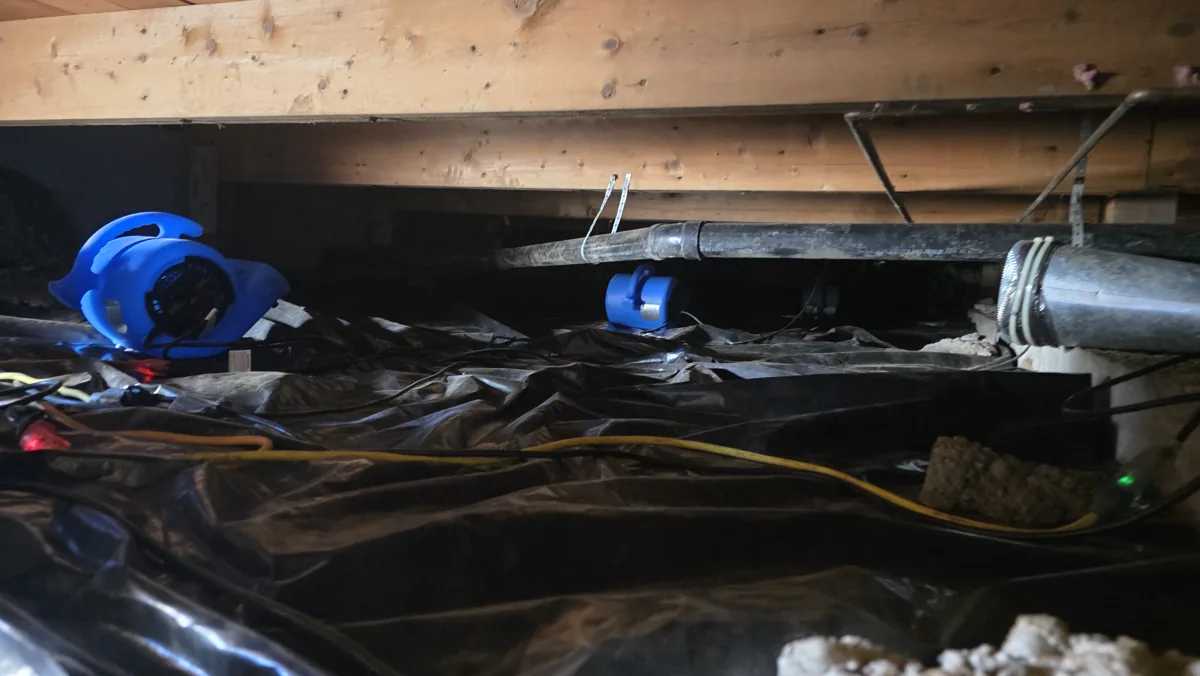
Once access is safe, we assess contamination, remove water and wet materials as needed, and check the framing and subfloor with moisture meters. Those readings guide drying and the timing of repairs. Crawlspace water removal and drying
If you have a private well or septic system
Flooded wellhead. If floodwater reached the well or you suspect contamination, use bottled water for drinking, cooking and brushing teeth until testing confirms the supply is safe. Ask your local health department and a qualified well contractor about inspection, disinfection and testing. Boiling cannot remove fuel or other chemicals. CDC guidance for flooded wells
Flooded septic tank or drainfield. Stop using sinks, toilets, showers and laundry while the system is flooded. Keep vehicles off saturated ground. Wait for the water to recede and ask your septic provider when the system can be used or pumped safely. If wastewater backed up indoors, keep people out of that area and tell the cleanup crew. Washington Department of Health septic guidance · Indoor sewage cleanup
What to document for insurance
Contact your flood insurer promptly. When it is safe, take a wide photo of each affected room, then close-ups of water lines, damaged materials and appliance labels. Record when you first saw water, which spaces it reached and when you regained access. Keep receipts for emergency work. Ask your adjuster what to retain and how to document items that pose a health hazard before disposal. National Flood Insurance Program claims checklist
We can provide photos, moisture readings, a scope of work and an Xactimate estimate when applicable. Your insurer determines coverage. See our insurance documentation
When to call Hand in Hand Restoration
Call from a safe place if water entered living areas, reached the subfloor or collected beneath the house. Tell us your town, what you can see, whether the water is still rising, whether sewage is involved and which roads are open. Our Bow-based team answers 24/7 and can plan an assessment when the property is accessible.
Call 360-770-0058 for flood cleanupText a photoPrefer to text? Send photos to 360-770-0058